
Labor Day is a U.S. federal holiday celebrated on the first Monday of September that honors the social and economic contributions of American workers. It began as a labor movement tradition in the late 1800s and became a federal holiday in 1894. Today, it also marks the unofficial end of summer, blending a serious historical purpose with a relaxed, family-friendly celebration.
Most people know Labor Day meaning as the last big cookout of the season, but the holiday actually carries a much deeper story. It grew out of a period when American workers were fighting for fair hours, safer conditions, and basic dignity on the job, often at real personal risk.
This guide walks through where Labor Day came from, what it truly means, and why it still matters heading into 2026, along with how its meaning has shifted over more than a century of celebration.
Quick Answer: What Does Labor Day Mean?
Labor Day is a U.S. federal holiday that honors the contributions, achievements, and dedication of American workers.It recognizes the labor movement and its role in improving workers’ rights and conditions.Celebrated on the first Monday of September, it also marks a well-deserved break for many workers.
What Is Labor Day?
Labor Day is a national holiday dedicated to celebrating the achievements of the American workforce. It’s observed every year on the first Monday in September, giving most workers a well-earned three-day weekend that closes out the summer season.
Beyond the grills and parades, the holiday exists to recognize the people whose labor built the country’s industries, infrastructure, and economy. It’s less about a single event and more about honoring an entire movement that shaped modern working life, from factory floors to office buildings.
For many families, Labor Day has also become a marker of transition. It’s the weekend when summer vacations wrap up, kids head back to school, and daily routines start shifting toward fall.
What Is the Meaning of Labor Day in the United States?
In the United States, Labor Day represents a tribute to workers and the labor movement that fought for better treatment in the workplace. It’s a reminder that many of the benefits people take for granted today, like weekends, minimum wage protections, and reasonable work hours, were won through real struggle rather than simply granted.
The holiday also reflects a shift in American culture. What began as a protest-driven celebration has evolved into a more relaxed, family-oriented holiday that still carries its original meaning underneath the surface, even if most people associate it more with barbecues than with labor activism today.
That dual identity is part of what makes Labor Day unique among American holidays. It manages to be both a serious historical tribute and a genuinely fun, low-pressure weekend.
Why Do We Celebrate Labor Day?
We celebrate Labor Day to recognize the value of work and the people who perform it. It’s a chance to pause and appreciate the everyday contributions of workers across every industry, from factories to offices to farms to healthcare.
The holiday also exists because of hard-fought advocacy. Labor unions in the 19th century pushed for a day that would formally acknowledge the workforce, and that push eventually turned into a nationwide tradition that has lasted for well over a century.
In a broader sense, celebrating Labor Day is a way of acknowledging that the country’s progress didn’t happen automatically. It happened because generations of workers showed up, often under difficult and even dangerous conditions, to build the systems everyone relies on today.
The History and Origin of Labor Day
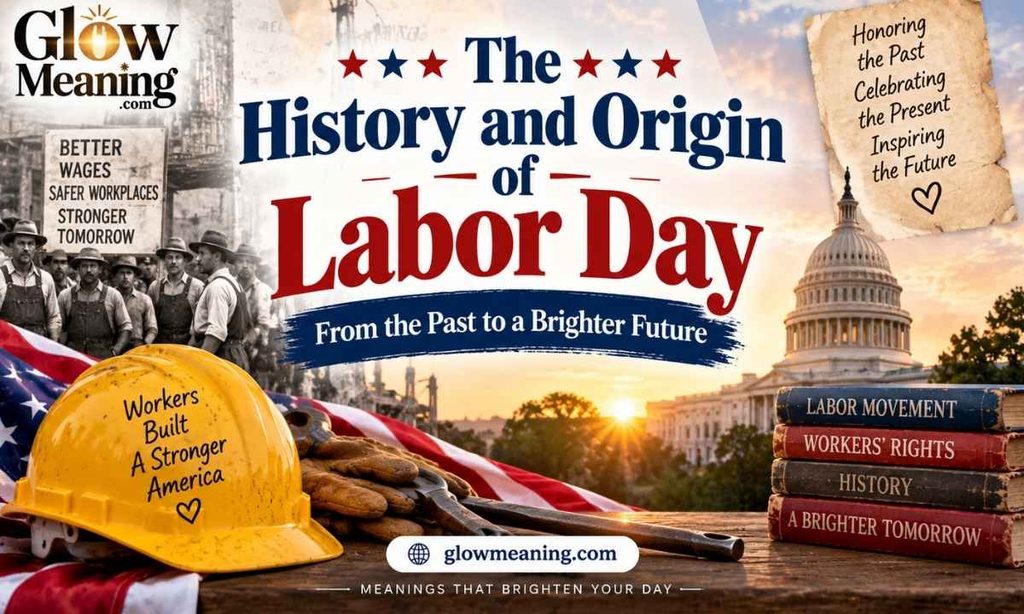
Labor Day’s origins trace back to the late 19th century, a time of long working hours, unsafe conditions, and growing tension between workers and industry leaders. Its origins date back to activists who first sought to establish a day that would formally pay tribute to workers and their contributions.
The first Labor Day celebration in the U.S. took place in New York City on September 5, 1882, when roughly 10,000 workers marched in a parade organized by the Central Labor Union and the Knights of Labor. The day included speeches, picnics, and fireworks, even though many workers had to take unpaid leave just to attend the event they were celebrating.
From there, the idea spread quickly across the country. New York was actually the first state to introduce a bill recognizing the holiday, but Oregon became the first state to officially pass one into law, doing so on February 21, 1887. Colorado, Massachusetts, and New Jersey followed that same year, and by the early 1890s, more than twenty additional states had adopted similar legislation.
By the time the federal holiday was formally established in 1894, the tradition had already taken root in communities across the nation, making national recognition feel less like a new idea and more like a long-overdue formality.
Who Started Labor Day in the United States?
Historians generally credit two men with proposing the idea of Labor Day, and the debate over which one deserves the primary credit has continued for well over a century. This inaugural celebration is often attributed to Matthew Maguire, a machinist and secretary of the Central Labor Union of New York, who is said to have first suggested the idea in 1882.
A second account gives credit to a different labor leader entirely. Some historians point to Peter J. McGuire, vice president of the American Federation of Labor, who proposed the idea to the Central Labor Union that same spring after reportedly being inspired by labor celebrations he witnessed in Canada.
Because both men were active in the labor movement at the same time and moved in overlapping circles, historians still debate which one truly deserves the credit. Either way, both figures were deeply involved in organizing American workers, and their shared vision helped shape the holiday we recognize today.
When Did Labor Day Become a Federal Holiday?
Labor Day officially became a federal holiday in 1894, more than a decade after its first celebration in New York City. On June 28 of that year, Congress passed an act making the first Monday in September a legal holiday for federal employees and the District of Columbia, with President Grover Cleveland signing it into law shortly after.
The timing wasn’t a coincidence. The legislation came just days after the federal government used troops to break up the Pullman Strike, a major national labor conflict that had drawn intense public attention. Passing the Labor Day bill so quickly afterward was widely seen as an attempt to smooth over tensions with the labor movement.
| Year | Milestone |
| 1882 | First Labor Day celebration held in New York City |
| 1887 | Oregon becomes the first state to legally recognize Labor Day |
| 1894 | Labor Day becomes a U.S. federal holiday |
| 2026 | Labor Day falls on Monday, September 7 |
Why Is Labor Day Celebrated on the First Monday in September?
Labor Day is celebrated on the first Monday in September because that’s the specific date Congress set into federal law back in 1894. Choosing a Monday guaranteed a three-day weekend, which made the holiday far easier for working families to actually enjoy rather than just observe.
The specific month also carried meaning for early organizers. They reportedly wanted a date positioned roughly halfway between Independence Day in July and Thanksgiving in November, giving workers a dedicated moment of recognition during that long stretch of the calendar year with no major holidays.
There’s also a practical seasonal element. Early September tends to land right before harvest season wraps up and before colder weather sets in across much of the country, making it a natural transition point for both work and leisure.
When Is Labor Day 2026?
Labor Day 2026 falls on Monday, September 7, marking another first-Monday-of-September observance for the federal holiday. As always, it lands right around the point when summer activities start winding down and fall routines, like the start of the school year, begin in earnest.
Because the date always falls on a Monday, Labor Day consistently creates a three-day weekend for most workers, schools, and government offices across the country, making it one of the more predictable holidays on the annual calendar.
For many families, this consistency is part of the appeal. Knowing the holiday always lands on a Monday makes it easy to plan trips, cookouts, or simple weekends of rest well in advance.
What Does Labor Day Honor?
Labor Day honors the collective achievements of the American workforce, including the people who built industries, infrastructure, and the broader economy through decades of physical and skilled labor. It also honors the labor movement itself, which fought for protections like the eight-hour workday, child labor restrictions, and safer working conditions.
At its core, the holiday celebrates effort. It’s a recognition that progress doesn’t happen on its own, it happens because people show up and work hard, often under difficult circumstances and without much public acknowledgment at the time.
It’s worth noting that this honor extends across every type of job, not just physical labor. Teachers, healthcare workers, retail employees, and office professionals are all part of the broader workforce that Labor Day was designed to celebrate.
Why Are American Workers Important to Labor Day?
American workers are the entire reason Labor Day exists. Without their organizing efforts in the 19th century, there would be no formal day set aside to recognize labor at all, let alone one that eventually became a federal holiday.
Workers across manufacturing, transportation, agriculture, and countless other industries built the foundation of the modern American economy, often while facing long hours, low pay, and minimal safety protections. Labor Day exists specifically to make sure that contribution isn’t forgotten, even as the holiday’s tone has softened significantly over the decades.
In many ways, Labor Day serves as a yearly reminder that economic progress and individual well-being are deeply connected, and that neither should be taken for granted.
Labor Day Traditions and How Americans Celebrate
Modern Labor Day traditions look quite different from the protest marches of the 1880s, but the holiday still brings people together in meaningful and often joyful ways.
Common ways Americans celebrate today include:
- Hosting backyard barbecues and cookouts with family and friends
- Attending local parades that echo the holiday’s original labor marches
- Taking advantage of Labor Day sales and shopping events
- Enjoying one last beach trip or outdoor getaway before summer ends
- Spending the extended weekend traveling or relaxing at home
- Watching or participating in local community events and festivals
While the activities have shifted from organized labor demonstrations to backyard celebrations, the underlying spirit, taking a break to appreciate hard work, remains largely the same across generations.
Why Is Labor Day Considered the End of Summer?
Labor Day is considered the unofficial end of summer partly because of timing and partly because of long-standing cultural tradition. It falls just before many schools resume for the fall semester, which naturally shifts the mood of the entire season for families with children.
Culturally, it’s also become a marker for seasonal transitions, like the shift from summer clothing to fall wardrobes, and the end of pool season in many parts of the country. None of this is officially tied to the holiday’s original labor-focused purpose, but it’s become one of its most widely recognized meanings today, especially among younger generations.
Retailers have also reinforced this association over time, using Labor Day weekend as a natural point to launch fall merchandise and back-to-school promotions.
Labor Day vs. May Day: What Is the Difference?
Labor Day and May Day both celebrate workers, but they come from different traditions and are observed on entirely different dates. Labor Day is uniquely American, observed the first Monday of September, while May Day is celebrated internationally on May 1st in many countries around the world.
The distinction wasn’t accidental. American organizers deliberately chose a separate date in September to avoid associating the U.S. holiday with the more radical political movements tied to May Day celebrations happening abroad at the time, particularly in the wake of labor unrest in Europe.
Labor Day vs. International Workers’ Day
International Workers’ Day, often called May Day, is rooted in the Haymarket affair of 1886 in Chicago and is recognized in many countries around the world as a day of both celebration and political advocacy. Labor Day, by contrast, stands apart as a distinctly American observance with its own separate origin story rooted in the 1882 New York parade.
| Feature | Labor Day (USA) | International Workers’ Day (May Day) |
| Date | First Monday in September | May 1st |
| Origin | 1882 New York labor parade | 1886 Haymarket affair, Chicago |
| Federal Recognition | Became a U.S. federal holiday in 1894 | Not a U.S. federal holiday |
| Tone Today | Relaxed, end-of-summer holiday | Often tied to labor rights advocacy |
What Does “Happy Labor Day” Mean?
“Happy Labor Day” is simply a friendly greeting used to wish someone a good holiday, similar to saying “Happy Thanksgiving” or “Happy Fourth of July.” It doesn’t carry any deeper hidden meaning beyond celebrating the day itself and wishing someone a restful, enjoyable break.
It’s commonly used in texts, cards, and social media posts, often paired with a wish for rest, good food, or quality time with family and friends. Businesses and employers also frequently use the phrase in customer emails and internal communications as a simple, appropriate way to acknowledge the holiday.
The Meaning Behind Common Labor Day Symbols
Labor Day doesn’t have as many well-known symbols as holidays like the Fourth of July, but a few traditions have become closely associated with it over time. Parades represent the holiday’s original activist roots, while backyard cookouts represent its more modern, relaxed identity as a seasonal celebration.
Even simple things, like the American flag appearing at Labor Day events, tie back to the holiday’s connection to national pride and the collective achievements of the workforce as a whole. Tools and trade-related imagery, like hammers or gears, also occasionally appear in Labor Day branding as a nod to its industrial-era origins.
Why Do People Wear Red, White, and Blue on Labor Day?
Many Americans wear red, white, and blue on Labor Day as a way to express patriotism, similar to how they might on Independence Day or Veterans Day. Since Labor Day celebrates a distinctly American movement and holiday, patriotic colors feel like a natural fit for the occasion, even outside of any official requirement.
This isn’t an official rule, but rather a cultural habit that’s grown alongside other American holidays that fall around the summer months, reinforced by decorations, clothing sales, and community events that lean into the patriotic theme.
Why Can’t You Wear White After Labor Day?
The idea that you shouldn’t wear white after Labor Day is a long-standing fashion superstition, not an official rule or law. It dates back to early 20th-century high society, when white clothing symbolized leisure, wealth, and summer vacations for affluent families who could afford lighter, impractical fabrics.
Wearing white after Labor Day was seen as a subtle signal of “new money” trying to extend a summer lifestyle into the fall season, which more established social circles viewed as a faux pas. Today, the rule is treated more as a fun, old-fashioned tradition than an actual fashion requirement, and plenty of people wear white year-round without a second thought.
What Is Open and Closed on Labor Day?
Since Labor Day is a federal holiday, many government offices, banks, and postal services are closed for the day, following the same schedule used for other major federal holidays. Most public schools are also closed, and many businesses adjust their hours to reflect the holiday’s reduced staffing.
That said, retail stores are often open, and many even extend their hours to accommodate Labor Day sales and promotional events. It’s always a good idea to check specific store or service hours ahead of time, since observance can vary significantly by location, industry, and individual business policy.
Learn what ICL means in texting and social media, with examples, usage, and alternative meanings explained clearly.
Why Labor Day Still Matters Today
Labor Day still matters because the issues that inspired it, fair wages, safe working conditions, and reasonable hours, remain relevant conversations today, even if they look different than they did in the 1880s. While the holiday has become more relaxed over time, its roots in advocacy haven’t disappeared entirely.
It’s also a rare moment each year when the country pauses to formally acknowledge the value of work itself, something that easily gets overlooked in the rush of daily life and constant productivity culture. Whether people spend it at a cookout or simply resting at home, the holiday still serves its original purpose in a quieter, more personal way.
For more detailed historical background, the U.S. Department of Labor’s official Labor Day page is a reliable and authoritative resource worth exploring further.
Frequently Asked Questions
What Is the Simple Meaning of Labor Day?
Labor Day is a holiday that honors the contributions and achievements of American workers, marked by a three-day weekend each September.
What Is the Main Purpose of Labor Day?
Its main purpose is to recognize the labor movement and the hard work of everyday American workers throughout history.
Who Does Labor Day Celebrate?
Labor Day celebrates all American workers, across every industry, along with the labor movement that helped secure fair treatment in the workplace.
Is Labor Day a Federal Holiday?
Yes, Labor Day has been a U.S. federal holiday since 1894, when it was signed into law by President Grover Cleveland.
Why Is Labor Day Always on a Monday?
Labor Day is always observed on the first Monday of September, a date set by federal law to guarantee a three-day weekend.
Why Is Labor Day in September?
September was chosen to give workers a dedicated day of recognition roughly midway between Independence Day and Thanksgiving.
Who Created Labor Day?
Historians credit either Matthew Maguire or Peter J. McGuire, both labor leaders active in the Central Labor Union of New York in 1882.
What Is the Difference Between Labor Day and May Day?
Labor Day is a U.S.-only holiday in September, while May Day, or International Workers’ Day, is celebrated globally on May 1st.
Is Labor Day the Unofficial End of Summer?
Yes, Labor Day is widely considered the unofficial end of summer, even though that meaning developed separately from its original labor movement purpose.
What Do You Say to Someone on Labor Day?
A simple “Happy Labor Day” is the standard and widely accepted greeting for the holiday.
Final Thoughts
Labor Day carries far more history than most people realize, rooted in a genuine fight for fair treatment in the workplace during one of the most turbulent periods of American industrial history. What started as a bold public demonstration in 1882 has grown into a holiday that balances celebration with quiet reflection on how far the workforce has come.
As you enjoy your long weekend in 2026, it’s worth remembering the workers whose efforts made this holiday possible in the first place. Whether you’re relaxing at a cookout, traveling somewhere new, or simply enjoying a day off, Labor Day remains a meaningful tribute to hard work, both then and now.

Professional content creator with 4+ years of experience in lifestyle, beauty, and meaningful digital storytelling through Glowmeaning.com.

1 thought on “Labor Day Meaning: History, Significance & Why We Celebrate It in 2026”