
Every year, right around late September, one Green Day song starts trending all over again. It’s not a new release it’s a track that’s over two decades old, yet it still hits just as hard. If you’ve ever wondered what “Wake Me Up When September Ends meaning” is really about, you’re about to get the full story.
This isn’t just a sad breakup song or a random title. It’s rooted in a real, personal loss, and understanding that backstory changes how you hear every line. Let’s break down the meaning, the origin, and everything in between.
What Does “Wake Me Up When September Ends” Mean?
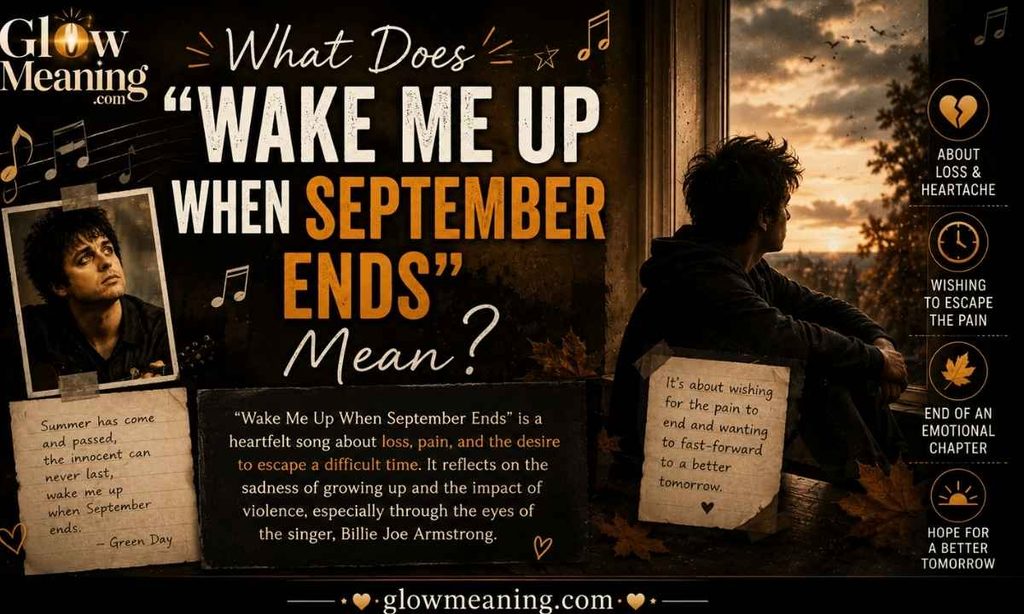
At its core, the song is about grief. Specifically, it’s about the death of Green Day frontman Billie Joe Armstrong’s father, who passed away in September 1982 when Armstrong was just ten years old.
Quick answer: “Wake Me Up When September Ends” is a personal tribute Billie Joe Armstrong wrote about losing his father, using September as a symbol of the month that changed his life forever.
The song isn’t about war, politics, or a breakup, even though many listeners assume otherwise. It’s a deeply personal piece of songwriting that happens to live on an album full of political commentary, which is part of why the meaning gets misread so often.
What makes this song stand out from other grief-related music is the honesty behind its creation. Armstrong didn’t write it right after his father passed. He carried that memory quietly for two decades before he felt ready to turn it into lyrics, and that gap says a lot about how differently people process loss. Some songs are written in the heat of an emotion; this one was written after years of sitting with it.
That kind of patience is rare in songwriting, and it’s part of why the song feels so measured and deliberate instead of raw or rushed. It doesn’t sound like a song written in the middle of a breakdown. It sounds like a song written by someone who finally found the right words after a long search.
Wake Me Up When September Ends Song Meaning
The song captures what it feels like to lose someone and have that loss reshape an entire month, and in some ways, an entire identity. September stopped being just a month for Armstrong it became a reminder.
- The lyrics reflect on time passing since the loss occurred.
- The song discusses how grief lingers, even years later.
- It captures the exhaustion of revisiting painful memories every year.
- The title itself became a coping mechanism, a wish to skip past the hardest month.
This is why so many listeners, even those who’ve never heard the backstory, connect with the song on an emotional level. Loss and time are universal themes.
You don’t have to know a single detail about Billie Joe Armstrong’s life to feel something when this song plays. Most people have a month, a date, or a season that reminds them of someone they lost or something that changed their life. The song simply gives language to a feeling a lot of people already carry quietly. That’s really the secret to why it still gets streamed heavily every autumn, long after its initial chart run ended. It isn’t nostalgia for the mid-2000s pop-punk era alone it’s recognition of a feeling that doesn’t fade with time.
Wake Me Up When September Ends Meaning and Origin
The origin story traces back to a single moment: the day of Armstrong’s father’s funeral. According to multiple interviews and music history sources, a young Armstrong went home after the service, locked himself in his room, and when his mother checked on him, he simply told her to wake him up when September ended.
That line stuck with him for years before it ever became a song. It wasn’t written immediately after the loss it took two decades for Armstrong to feel emotionally ready to put those feelings into lyrics.
For most of his career leading up to that point, Armstrong avoided writing directly about his father’s death. He touched on family, growing up, and personal struggle in earlier Green Day songs, but this specific loss stayed largely off-limits in his lyrics. It wasn’t until the band was working on American Idiot, an album already built around bigger themes of identity and disillusionment, that Armstrong finally revisited that locked-room memory from his childhood and turned it into something he could share with the world.
Interestingly, the band’s publicist, not Armstrong himself, was the one who first confirmed the personal meaning behind the song publicly. Armstrong has said he preferred letting the song speak for itself rather than explaining it right away, which is part of why the meaning stayed a mystery to casual listeners for so long after the album’s release.
Why Did Green Day Write “Wake Me Up When September Ends”?
Green Day didn’t write this song as a planned single or a calculated hit. It came from Armstrong needing to process something he’d avoided addressing for most of his life.
In interviews, Armstrong has explained that he intentionally avoided writing about his father’s death for years. When he finally did, it wasn’t easy he’s said the song was one of the hardest for him to perform emotionally, especially in the beginning.
Writing it seems to have been part of a personal healing process, not just a creative decision for the band.
The Real Story Behind Wake Me Up When September Ends
The real story is simple, but powerful. Armstrong lost his father to esophageal cancer in September 1982. His father worked as a jazz musician and truck driver to support the family, and his death left a permanent mark on Armstrong’s relationship with that time of year.
For roughly twenty years, Armstrong didn’t publicly discuss the meaning behind the song’s eventual title. It wasn’t until the album’s release, and later interviews, that the full context became widely known.
One detail that often gets overlooked is how young Armstrong actually was when this happened. Losing a parent at ten years old is a different kind of grief than losing one as an adult. A ten-year-old doesn’t have the emotional vocabulary or life experience to process something that permanent, which is likely part of why it took him so long to find the right way to express it. By the time he wrote the song, he wasn’t just remembering the loss itself he was also reflecting on how that loss had quietly shaped the person he grew up to become.
This also explains why the song leans more reflective than angry or bitter. It isn’t written from the raw, immediate pain of the moment. It’s written from a place of looking back, which gives it a different emotional texture than a typical grief song.
Wake Me Up When September Ends and Billie Joe Armstrong’s Father
Armstrong’s father passed away when Billie Joe was only ten years old, an age where losing a parent leaves a lasting imprint on how a person sees the world. The song references the number of years that had passed since the loss, tying the lyrics directly to real timeline of Armstrong’s own life.
This is part of what makes the track feel so authentic. It’s not a metaphorical loss it’s Armstrong revisiting an actual, specific memory from his childhood.
Armstrong’s father worked as a jazz musician on the side while holding down a day job as a truck driver to support a large family. That detail matters more than it might seem, since it shows where at least part of Armstrong’s early connection to music likely came from. Losing a parent who was himself a musician adds another layer to the song, almost like Armstrong was continuing a conversation with his father through the one language they may have shared.
It also helps explain why the song feels less like a performance and more like a private moment shared publicly. Armstrong has said in interviews that performing it took real emotional effort, especially in the years right after the album’s release, before he’d had more time and distance from writing it.
Who Is “September” About in the Song?
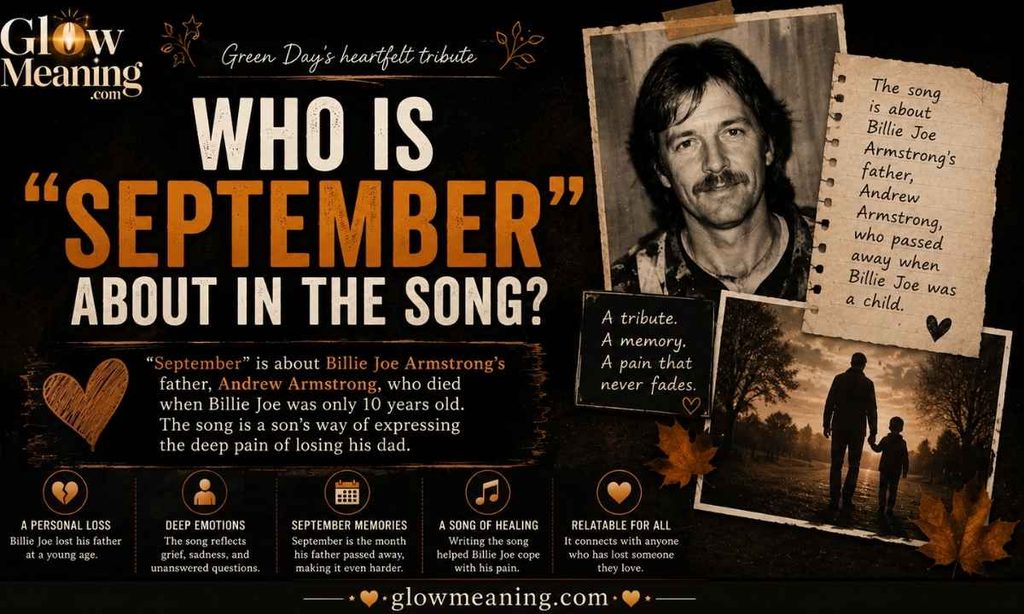
This is a common point of confusion. The song isn’t about a person named September it’s about the month itself as a symbol.
September represents:
- The month Armstrong’s father died
- A recurring emotional trigger every year
- A stand-in for grief, loss, and the passage of time
Because the title sounds like it could be about a person, some listeners assume “September” is a nickname for someone. In reality, it’s tied to the calendar, not a character.
This kind of misunderstanding is actually pretty common with song titles that personify abstract things. Listeners are used to songs being about people, so a title that sounds like it could be addressing someone directly tends to get interpreted that way by default. Once you know the real context, though, the meaning becomes much clearer, and the emotional weight of the song only grows. It’s not a love song disguised with a strange title; it’s a memorial dressed in language simple enough that it took years for most fans to fully understand.
Explore Orgo Meaning to understand its definition, slang usage, and connection to organic chemistry.
Why Is Wake Me Up When September Ends So Emotional?
A few things make this song hit harder than a typical ballad:
- It’s based on a true story, not a fictional narrative.
- The vulnerability in Armstrong’s delivery feels genuine because it is.
- The universal theme of grief makes it relatable even to listeners who don’t know the backstory.
- The slow, melodic build mirrors the emotional weight of the lyrics.
Songs that come from real pain tend to resonate longer, and this is a clear example of that pattern.
Wake Me Up When September Ends Lyrics Meaning
Without reproducing full lyrics, it’s worth understanding the emotional arc of the song. It moves through:
- A reflection on innocence and how it fades after loss
- A recognition that time has passed, more than expected
- A repeated wish to skip past the painful reminder that September brings
The structure repeats the central idea in different ways, reinforcing just how present that grief still feels, even years later.
What Does “Wake Me Up” Mean in the Song?
“Wake me up” functions almost like a plea to skip forward in time. It’s not about literal sleep — it’s about avoiding a painful period long enough that it passes without having to consciously sit through it.
This phrase mirrors what many people experience during difficult anniversaries or emotionally heavy periods: a wish to fast-forward through the hard part.
For more helpful explanations of terms and their meanings, visit Merriam-Webster Dictionary.
What Does “September Ends” Symbolize?
“September ends” symbolizes relief, or at least the hope of relief. Since September is tied to the anniversary of his father’s death, the ending of the month represents:
- The closing of a painful chapter, at least for that year
- A return to normalcy after an emotionally heavy stretch
- A recurring cycle of grief that resets annually
It’s less about celebration and more about survival, the sense of getting through another difficult month.
Is Wake Me Up When September Ends About 9/11?
This is one of the most common misconceptions, and it’s understandable why. The song appears on American Idiot, an album largely built around political commentary and the Iraq War era, and its music video features a soldier storyline.
However, Armstrong has confirmed the song itself is about his father, not 9/11 or the war. The confusion largely comes from the music video’s separate narrative, which was created independently of the song’s original meaning.
Wake Me Up When September Ends Music Video Meaning
The music video tells a completely different story from the song’s original inspiration. Directed by Samuel Bayer, it follows a young couple, played by Jamie Bell and Evan Rachel Wood, whose relationship is upended when the boyfriend enlists in the Marine Corps during the Iraq War.
The video shows him being deployed and ultimately caught in an ambush overseas, while his girlfriend is left waiting and mourning back home. Bayer has said he wanted the video to reflect on how military recruitment messaging affected young people during that era, giving the visuals an anti-war undertone.
Quick answer: The music video reinterprets the song as a story about a soldier and the loved one he leaves behind, separate from Armstrong’s personal story about his father.
This is exactly why so many people associate the song with war themes, even though the lyrics themselves were written about something else entirely.
Wake Me Up When September Ends Release Date and Album
Here’s a quick breakdown of the song’s key details:
| Detail | Information |
| Album | American Idiot |
| Album Release Year | 2004 |
| Single Release Date | June 13, 2005 |
| Label | Reprise Records |
| Lyricist | Billie Joe Armstrong |
| Producer | Rob Cavallo |
| Director (Music Video) | Samuel Bayer |
The song was the fourth single released from American Idiot, following the massive success of the title track and other hits from the same album.
Why Is Wake Me Up When September Ends Explicit?
This one trips people up because the song itself doesn’t contain explicit language. The “explicit” tag actually applies to the American Idiot album as a whole, which carries a Parental Advisory sticker due to language found on other tracks.
Since the song is bundled under the same album listing on streaming platforms and retail packaging, it can appear under the “explicit” label even though its own lyrics don’t require one.
Wake Me Up When September Ends Meaning on Reddit
Search Reddit for this song, and you’ll find long threads where people share their own interpretations, personal stories, and reactions to learning the real meaning for the first time. A recurring theme in these discussions is surprise, many listeners had no idea the song was about a real personal loss rather than a general breakup or war anthem.
Reddit threads also frequently address the annual meme trend, with users debating whether joking about “waking up Billie Joe” every October 1st is harmless fun or disrespectful given the song’s origin.
Wake Me Up When September Ends Meaning on TikTok and Social Media
TikTok has played a huge role in keeping this song culturally relevant. Every year, right as September ends, the platform floods with videos referencing the song, often paired with countdowns, memes, or emotional storytelling clips.
Some creators use the trend purely for humor, while others use the moment to actually explain the song’s real backstory, helping newer generations understand the emotional weight behind the joke format. This mix of humor and education is a big reason the song continues to resurface every single year.
It’s a rare example of a song surviving multiple generations of internet culture without losing its emotional core. A track from 2004 shouldn’t logically be trending on a platform built around short-form video decades later, yet it consistently does, right on schedule, every September 30th and October 1st. That kind of staying power usually only happens when a song taps into something people genuinely feel, not just something that was popular once.
Why the Song Became Associated With Loss and Grief
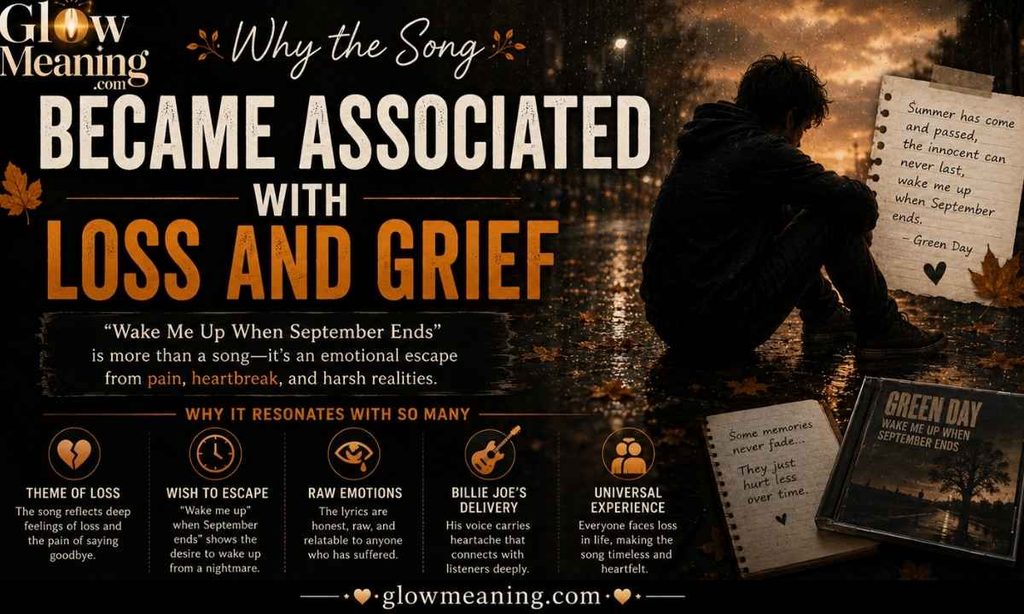
Beyond Armstrong’s personal story, the song has taken on a broader emotional role over the years. It’s been used in tribute videos, memorial playlists, and even connected to major real-world tragedies.
Notably, the song’s single release came shortly after Hurricane Katrina struck the Gulf Coast in 2005, and it quickly became associated with the disaster after online creators paired the track with news footage of the storm’s aftermath. That connection wasn’t planned, but it reflects how naturally the song lends itself to themes of loss on a larger scale.
This pattern shows how a deeply personal song can end up representing collective grief for entire communities, not just the person who wrote it.
The song has also found its way into memorial services, veteran tribute events, and grief support communities over the years, often used by people who have no direct connection to Armstrong’s story but find the emotional shape of the song fits their own experience. That’s ultimately the mark of a song that transcends its original inspiration: it becomes a container other people can pour their own grief into, without losing what made it meaningful in the first place.
Final Meaning: What Wake Me Up When September Ends Is Really About
At the end of the day, “Wake Me Up When September Ends” is a song about grief, memory, and the strange way time keeps moving even when part of you feels stuck. It started as a private coping phrase from a grieving ten-year-old and grew into one of the most recognizable songs about loss in modern rock.
The music video, the memes, and the war-era associations all added new layers over the years, but the heart of the song has never changed. It’s Billie Joe Armstrong, still carrying the memory of his father, using music to make sense of a loss that never fully goes away.
For fans who only knew this as “that song people joke about every October,” learning the real backstory tends to change the listening experience entirely. It goes from being a catchy, melancholy rock ballad to something far more human a reminder that even the artists behind our favorite songs are carrying their own private histories, sometimes for decades, before they find the words to share them. The next time September rolls around and this song starts trending again, it might be worth listening to it not as a meme, but as what it actually is: one man’s tribute to his father, and to a loss that reshaped how he sees an entire month of the year.
Frequently Asked Questions
What is Wake Me Up When September Ends really about?
It’s about Billie Joe Armstrong’s grief over his father’s death in September 1982, not about war or a breakup.
Did Billie Joe Armstrong’s father really die in September?
Yes, Armstrong’s father passed away from esophageal cancer in September 1982 when Armstrong was ten years old.
Is the music video connected to the song’s real meaning?
Not directly. The video tells a separate story about a soldier and his girlfriend, created independently from the song’s personal origin.
Why do people joke about the song every year?
Because the title sounds like a demand to “wake up” once September passes, which turned into a recurring internet meme every October 1st.
What album is Wake Me Up When September Ends from?
It’s from Green Day’s 2004 album American Idiot, released as the fourth single in June 2005.
Is Wake Me Up When September Ends about 9/11?
No, though it’s often mistaken for a 9/11 or war-related song because of its album and music video themes.
Why does the song feel so emotional to listeners?
Because it’s based on a real personal loss, and the themes of grief and time passing are relatable to almost everyone.

Professional content creator with 4+ years of experience in lifestyle, beauty, and meaningful digital storytelling through Glowmeaning.com.

1 thought on “Wake Me Up When September Ends Meaning: Song, Lyrics, Origin & Story Explained”